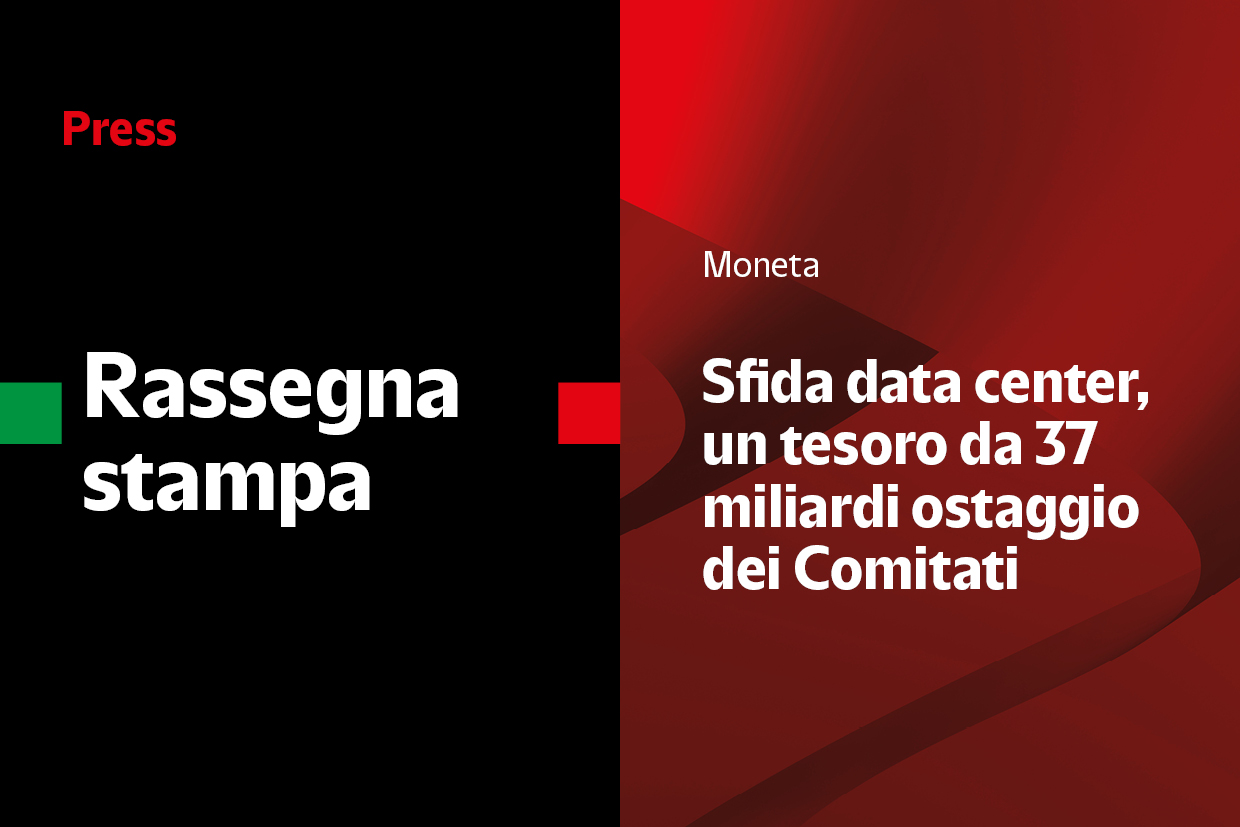
The data center sector represents one of the most significant opportunities for Italy’s digital economy. This is the key message emerging from a recent feature published by Moneta, which examines both the growth potential of the industry and the challenges still hindering its expansion.
According to the estimates cited in the article, the development of data centers could generate €36.9 billion in infrastructure investments by 2036, create 26,000 permanent jobs, and support approximately 20,000 construction workers annually, while also contributing to the regeneration of former industrial sites and strengthening the country’s competitiveness.
In the article, Floriano Monteuro, Director General of IDA – Italian Datacenter Association, highlights the strategic role of data centers in enabling the growth of artificial intelligence, cloud services, and the broader digital economy. At the same time, he underlines the need to address several obstacles that currently slow down investment.
Among the main challenges identified are regulatory uncertainty, complex permitting procedures, and local opposition that often accompanies the development of new projects. In many cases, despite the redevelopment of previously urbanized industrial sites and the adoption of increasingly efficient technologies from both an energy and environmental perspective, projects face lengthy approval processes and a level of skepticism that risks slowing the country’s digital transformation.
The analysis also points out that Italy still has considerable room for growth compared to Europe’s leading digital infrastructure markets. Today, more than 80% of the country’s operational capacity is concentrated in Milan, but demand for digital infrastructure is increasingly expanding to other regions, creating new opportunities for local economic development.
To support this growth, IDA calls for concrete measures to encourage investment, greater regulatory certainty, the promotion of brownfield redevelopment, and improved access to incentive schemes for businesses. These actions are considered essential if Italy is to compete effectively with other European digital hubs and fully capture the economic, employment, and technological benefits generated by the sector.
In a context of rapidly growing demand for computing capacity and the continued advancement of artificial intelligence, the future of data centers extends far beyond the industry itself. It is a strategic issue for the competitiveness, innovation, and digital sovereignty of the country as a whole.